Occupational Therapy for Children with Spina Bifida
- Posted by Melissa Clack
- Categories Blog, Occupational Therapy
- Date January 14, 2026
Raising or teaching a child with spina bifida often means navigating challenges that extend far beyond physical mobility. Children with spina bifida may face learning difficulties, challenges with independence, and barriers to full participation in school and daily life. With the right supports in place, however, these children can build essential skills, gain confidence, and thrive both academically and socially.
At Pediatric Therapeutic Services (PTS), occupational therapy for children with spina bifida focuses on helping each child reach their full potential by addressing physical, cognitive, and functional needs in meaningful and practical ways—especially within the school environment. Learn more here.
Understanding Spina Bifida and Its Impact on Learning
Spina bifida is a neural tube defect that affects the development of the spinal cord. Its severity can vary widely, which means no two children experience spina bifida in the same way. Some children may have mild physical challenges, while others may have more complex needs that impact their learning, movement, and self-care.
Spina bifida itself is a physical condition, but it is often associated with developmental delays and learning challenges that can affect academic performance. Many children experience spina bifida learning difficulties, including:
- Challenges with attention, memory, and organization*
- Difficulty with fine motor skills, such as writing, cutting, or using classroom tools
- Delayed self-care skills, including dressing, toileting, or managing personal items
- Visual-motor and perceptual difficulties that impact reading and math
- Fatigue and reduced endurance during the school day
Because these challenges often affect school participation, occupational therapy plays a critical role in supporting educational success.
How Occupational Therapy Helps Children with Spina Bifida
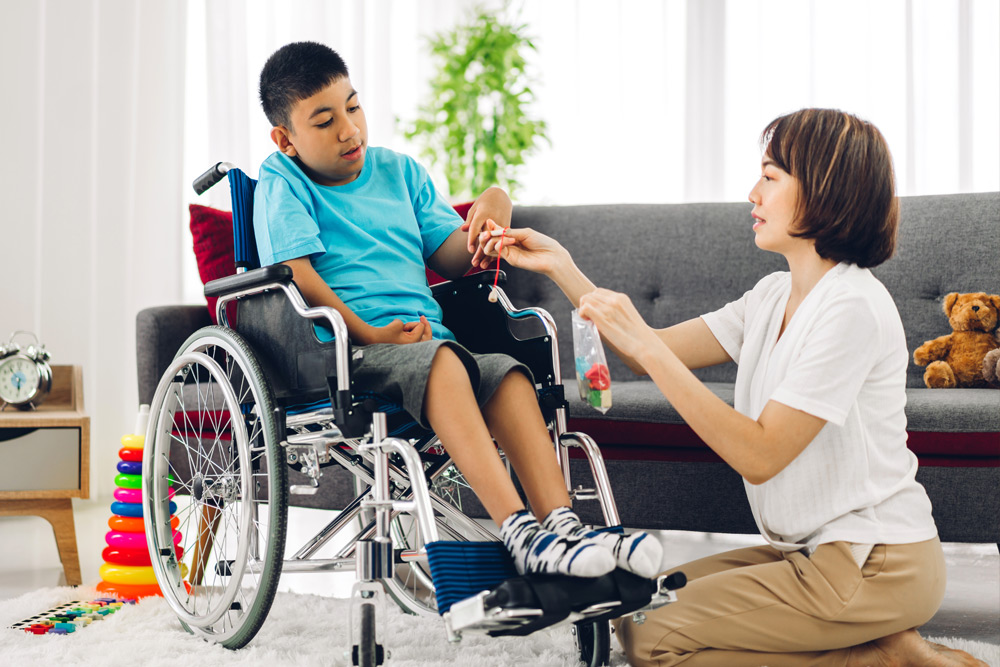
Spina bifida occupational therapy focuses on helping children participate as independently as possible in daily activities at school, at home, and in the community. Occupational therapists look beyond diagnoses to understand how a child functions in real-life environments.
Occupational therapy for spina bifida may support children by addressing:
- Fine motor skills for writing, keyboarding, and classroom tasks
- Self-care skills such as managing clothing, school supplies, and personal hygiene
- Visual-motor integration for reading, math, and navigating worksheets
- Executive functioning skills like organization, time management, and task completion
- Sensory processing and emotional regulation to support classroom engagement
In school settings, occupational therapists work closely with teachers, families, and special education teams to ensure that strategies are meaningful and consistent across various environments.
Supporting School Success Through Occupational Therapy
School can present unique challenges for children with spina bifida. Occupational therapy interventions are designed to remove barriers and promote independence, enabling children to fully participate alongside their peers.
OTs may help by:
- Modifying classroom materials to improve accessibility
- Teaching alternative writing methods, such as typing or voice-to-text
- Developing routines that support transitions and organization
- Building endurance for seated tasks and classroom participation
- Supporting IEP goals related to functional and academic skills
By focusing on strengths and practical solutions, occupational therapy empowers children to engage more confidently in learning.
Activities for Children with Spina Bifida
Occupational therapists use purposeful, engaging strategies to help children develop essential skills. Activities for children with spina bifida are carefully selected to support both development and motivation. These may include:
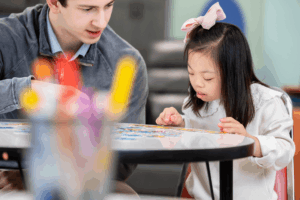
- Fine motor games that strengthen hand coordination and dexterity
- Adaptive art and craft projects to encourage creativity and independence
- Daily living skill practice, such as opening containers, managing backpacks, or organizing desks
- Play-based activities that promote problem-solving and social interaction
- Strengthening and coordination activities adapted for mobility needs
These activities are not just exercises—they are meaningful experiences that build confidence and functional ability.
FAQs
How can occupational therapy help a child with spina bifida?
Occupational therapy for spina bifida helps children develop the skills they need for daily activities, school participation, and independence. Occupational therapists support fine motor skills, self-care, organization, classroom access, and the use of adaptive tools, enabling children to succeed at home and in school.
What does spina bifida occupational therapy focus on in school?
In school settings, spina bifida occupational therapy focuses on classroom participation, writing and technology use, managing school materials, navigating the environment, and meeting IEP goals related to functional and academic success.
What types of learning difficulties are common with spina bifida?
Common learning difficulties associated with spina bifida may include problems with attention, memory, executive functioning, visual-motor integration, and written expression. Occupational therapists work closely with teachers to address these challenges using practical, school-based strategies.
Helping Children with Spina Bifida Reach Their Full Potential
Children with spina bifida are capable, resilient, and full of potential. With thoughtful support and evidence-based occupational therapy for spina bifida, they can overcome challenges, participate more fully in school, and develop the skills they need for success beyond the classroom.
If you’re a parent or educator seeking guidance on how occupational therapy can support a child with spina bifida, Pediatric Therapeutic Services is here to help. Contact PTS today to learn more about our school-based occupational therapy services and how we partner with families and schools to support every child’s success.
*Source: NCCD